

EMU, ICU, and NICU EEG Monitoring
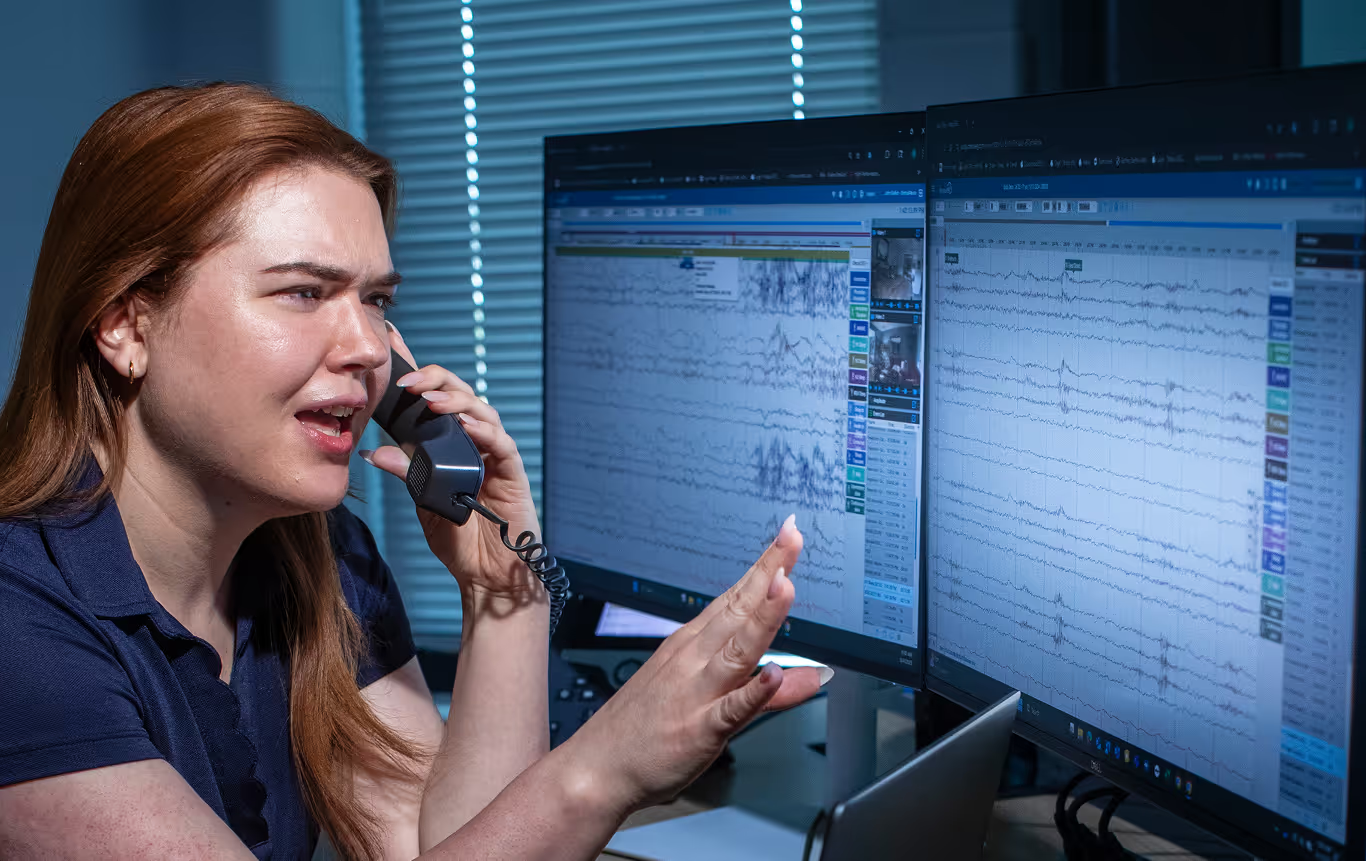
In the high-stakes environment of critical care, constant neurological vigilance is essential in certain patients. Stratus offers turn-key EEG monitoring services to meet the demands of your critical care and epilepsy monitoring units. And as the largest employer of R. EEG T.s in the nation, we have the ability to customize service delivery to fit your needs.
With a team providing monitoring services, your hospital or healthcare facility can reduce administrative, training, and cost burdens — all while providing critical care to those patients at risk of brain injury and consequent neurological damage.
.avif)
The Critical Need for cEEG Monitoring Services
The data is clear: Continuous EEG (cEEG) is essential for identifying non-convulsive seizures, which are common and clinically invisible in critical care settings.
Up to
33
%

prevalence of seizures
in ICU population with AMS1,2
in ICU population with AMS1,2
Up to
90
%
of these seizures have no or only
subtle clinical signs detected only with EEG3
subtle clinical signs detected only with EEG3
Up to
87
-
90
%
of seizures captured within
48 hours of cEEG4
48 hours of cEEG4
Aligning With ACNS Best Practice Guidelines
The American Clinical Neurophysiology Society (ACNS) Guidelines⁵ recommend cEEG in the ICU for the following critical applications:
✓ Diagnosis
of nonconclusive seizures, nonconvulsive status epilepticus, and other paroxysmal events
✓ Assessment
of therapy for seizures and status epilepticus
✓ Identification
of cerebral ischemia
✓ Monitoring
of sedation and high-dose suppressive therapy
✓ Assessment
of severity of encephalopathy and prognostication
EEG Monitoring Solutions
At Stratus, we design our services to match your specific clinical protocols and staffing needs, so you have support when you need it most.
Continuous EEG Monitoring
With a 4:1 patient-to-technologist ratio, on average, Stratus can provide continuous EEG monitoring as a service, changing the way you manage patient care.
Intermittent Plus Monitoring
Retrospective review of EEG and video at a minimum of every 2 hours for noncritical patients.
Intermittent EEG Monitoring
Flexible monitoring services to meet healthcare provider needs, such as after-hours or weekend monitoring and support during holidays or vacations. We ensure a patient to-technologist ratio of no greater than 12:1 to confirm quality and CPT code requirements.

VEEG Clipping Service
Stratus’ highly qualified R. EEG T.s and CLTMs will remotely clip VEEGs on your current hospital system’s platform for the purpose of data reduction and storage—no clinical interpretation, annotations, or report generation included.
VEEG Annotation and Pruning Service
Stratus provides a consistent, high-quality annotation and pruning process that reduces EEG study length while preserving essential clinical content. Our analysts follow a standardized workflow that integrates patient history, event review, and report generation within the hospital system’s platform, ensuring physician-ready data every time.
EEG Monitoring Best Practices
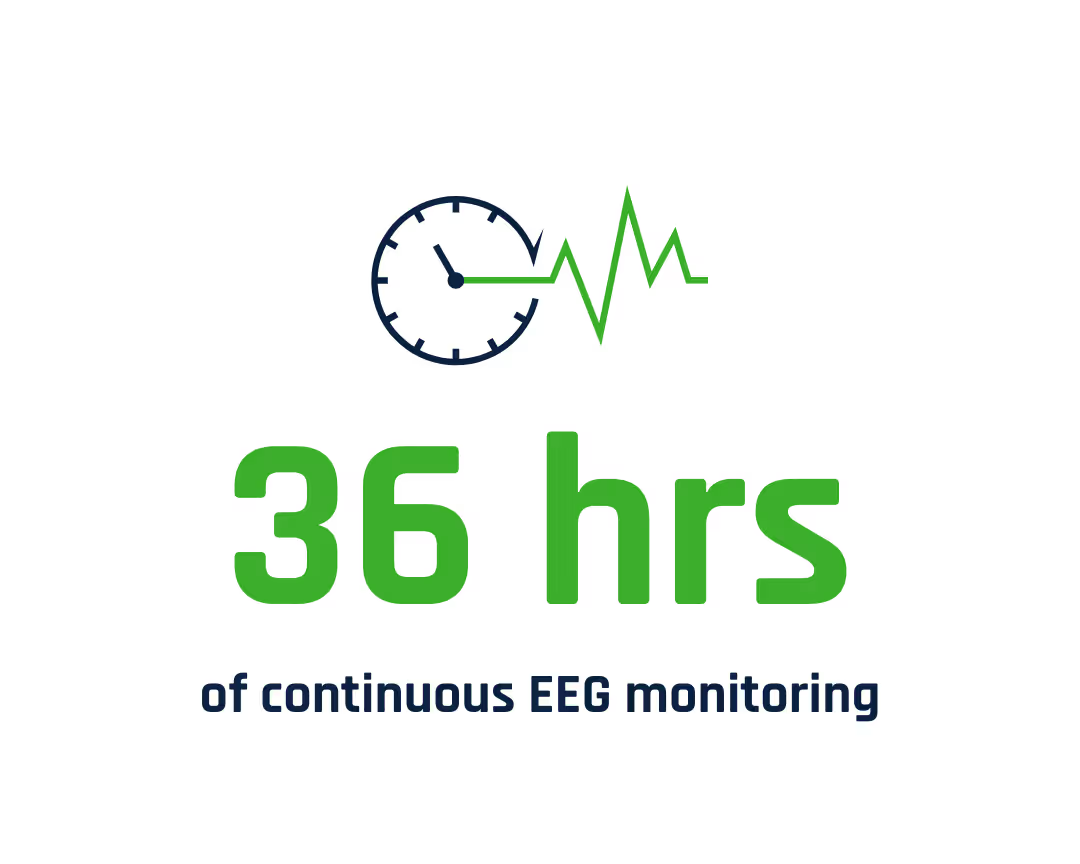
A Cleveland Clinic study recommends that the standard monitoring duration be increased to 36 hours of continuous EEG monitoring in critically ill patients. For certain patients, up to 24 hours of continuous monitoring is adequate, while multiple situations actually warrant 48 hours of cEEG monitoring.
Transforming Continuous EEG Monitoring
Providing EEG testing and monitoring in the ICU can be a challenge, that’s why we offer full outsourcing, contingency staffing, or off-hour/after-hours shifts. Stratus’ services are not only flexible enough to meet your monitoring protocols but are also cost-effective. Plus, no additional software is needed. Stratus can access and monitor using your current EEG hardware and software.


.svg)
%201.svg)