
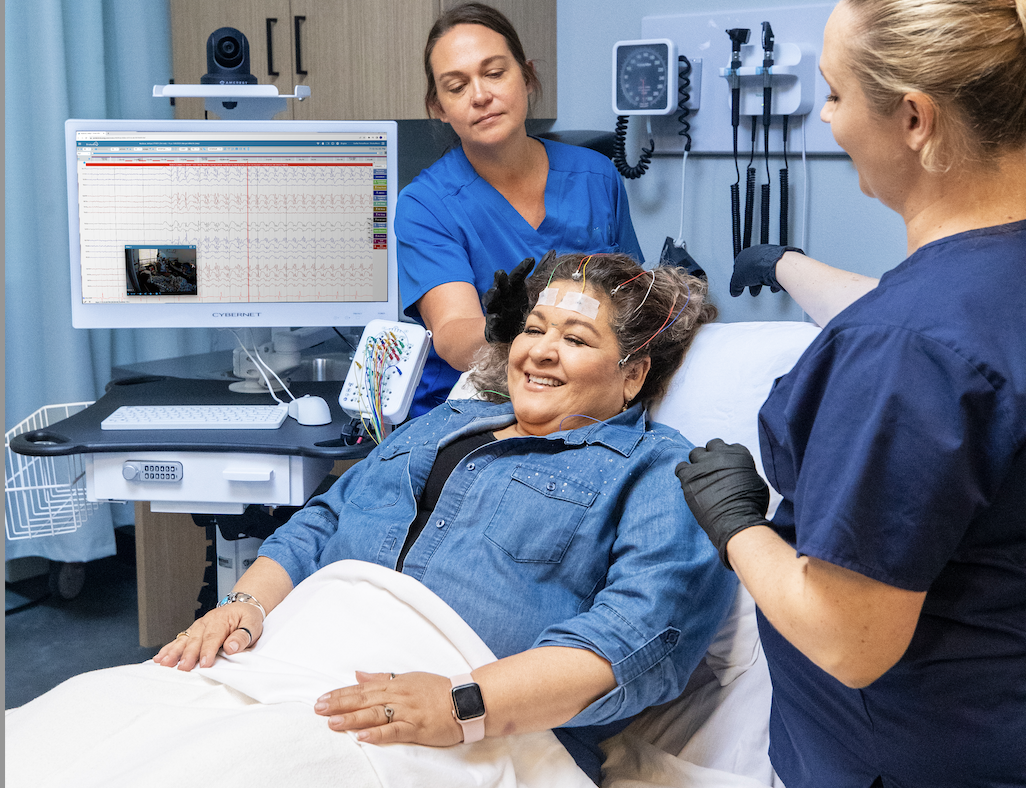

Continuous electroencephalography (cEEG) is emerging as a valuable tool in the management of ischemic stroke survivors, particularly for predicting post-stroke epilepsy (PSE). This blog explores the clinical implications of cEEG monitoring, highlighting its diagnostic and prognostic benefits, and providing insights into when extended monitoring is most beneficial.
Why cEEG Matters in Post-Stroke Care
- Stroke and Epilepsy Connection: Stroke is a leading cause of epilepsy in older adults, accounting for over half of new-onset epilepsy cases in individuals aged 65 and older. Early identification of high-risk patients is critical for guiding follow-up care and exploring preventive therapies.
- Limitations of Routine EEG or short EEG: While sEEG (typically 20–60 minutes) is logistically feasible, it often misses transient abnormalities that are critical for predicting long-term seizure risk.
- Advantages of cEEG: cEEG (≥12 hours) offers higher sensitivity for detecting epileptiform activity, rhythmic/periodic abnormalities, and electrographic seizures, which are strong predictors of PSE.
Key Findings from Recent Research
- Improved Detection Rates: Compared to sEEG, cEEG significantly increases detection of:
- Regional slowing (59% vs 41%)
- Generalized rhythmic delta activity (36% vs 12%)
- Lateralized rhythmic delta activity (11% vs 5%)
- Interictal epileptiform discharges (11% vs 3%)
- Electrographic seizures (4% vs 0.7%)
- Prognostic Value: Abnormalities detected on cEEG, such as lateralized periodic discharges and electrographic seizures, are strongly associated with higher PSE risk. Patients with normal cEEG had no PSE events during follow-up, suggesting its potential as a rule-out tool.
When to Extend Monitoring Beyond Routine EEG
- High-Risk Patients: Patients with a SeLECT2.0 score ≥4 (indicating high baseline risk for PSE) benefit most from extended monitoring.
- Early Abnormalities: Focal or rhythmic/periodic patterns detected on sEEG justify extending monitoring, as these often indicate higher likelihood of additional epileptic activity.
- Normal sEEG: If the initial hour of monitoring is normal, the likelihood of detecting electrographic seizures or other abnormalities on cEEG is low, suggesting that extended monitoring may not be necessary.
Clinical Applications of cEEG
- Prognostic Stratification: Incorporating cEEG findings into the SeLECT-EEG model improves risk stratification for PSE, enabling better identification of high-risk patients.
- Guiding Follow-Up Care: Prognosis-oriented stratification can help prioritize patients for first-seizure clinics, which have been shown to reduce emergency presentations and improve outcomes in new-onset epilepsy.
- Potential for Preventive Therapies: While routine prophylactic antiseizure medication is not recommended, cEEG findings may help identify patients for future trials of antiepileptogenic treatments.
Practical Considerations for cEEG Implementation
- Resource Allocation: cEEG should be selectively applied to patients with high-risk profiles or early abnormalities on sEEG.
- Scalability: Advances in point-of-care EEG and AI-supported review may enable broader implementation of cEEG in stroke units.
- Future Directions: Prospective multicenter studies are needed to validate cEEG’s cost-effectiveness and its impact on patient-centered outcomes.
cEEG monitoring offers significant diagnostic and prognostic advantages in the care of ischemic stroke survivors, particularly for predicting post-stroke epilepsy. By adopting a selective, risk-guided approach to cEEG, clinicians can improve patient outcomes and optimize resource utilization. As technology advances, cEEG has the potential to become a cornerstone of post-stroke care, paving the way for more effective management and preventive strategies.
If you’re a healthcare provider, consider integrating Stratus' cEEG into your post-stroke care protocols for high-risk patients.
Source: Schubert, K.M., Dasari, V., Tatillo, C., Naeije, G., Beniczky, S., Bentes, C., Galovic, M., Gaspard, N. and Punia, V. (2026), Continuous Versus Short EEG After Ischemic Stroke: What cEEG Adds for Detecting Abnormalities and Predicting Post-Stroke Epilepsy. Ann Neurol. https://doi.org/10.1002/ana.78251
About the Author
About the Presenter

Jeremy D. Slater, MD, FAAN, FAES, FACNS
Jeremy D. Slater, MD, FAAN, FAES, FACNS is a board-certified neurologist and Chief Medical Officer at Stratus. As former Director of the Texas Comprehensive Epilepsy Program at UTHealth Houston, Dr. Slater has specialized in epilepsy and clinical neurophysiology for over 35 years. His extensive background in academic research and clinical practice informs his current focus on expanding the reach of EEG technology and remote neurodiagnostic services. Dr. Slater is a frequent contributor to medical literature and a leading voice in the integration of digital health and neurology. Explore his full publication history via Google Scholar and ORCID.




.svg)
%201.svg)