


Stratus recently published data concerning the optimal duration of ambulatory video EEG recording based upon the timing of clinical events in a large nationwide database. We looked at pediatric, adult, and geriatric patients separately, and the full, peer-reviewed publication is now available on Epilepsia Open.
Key Findings
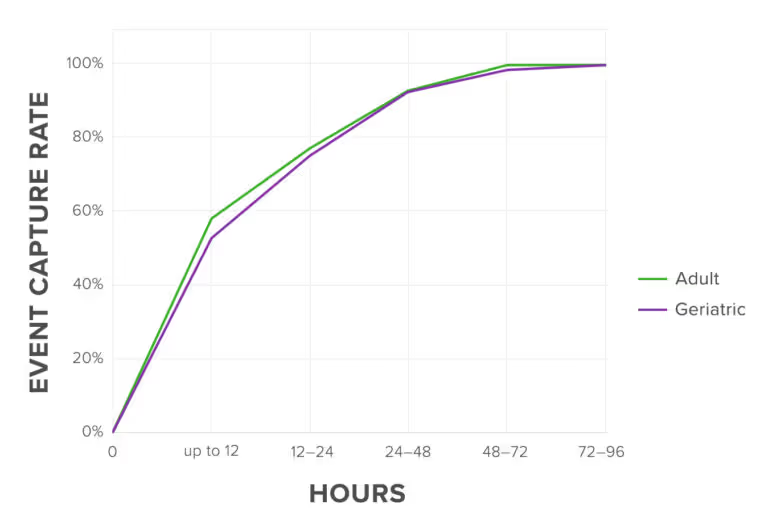
For adult and geriatric patients, there was a substantial incremental yield for each additional day of recording, with an additional 16-17% of patients experiencing events between 1 to 2 days, and an additional 6% between 2 to 3 days.
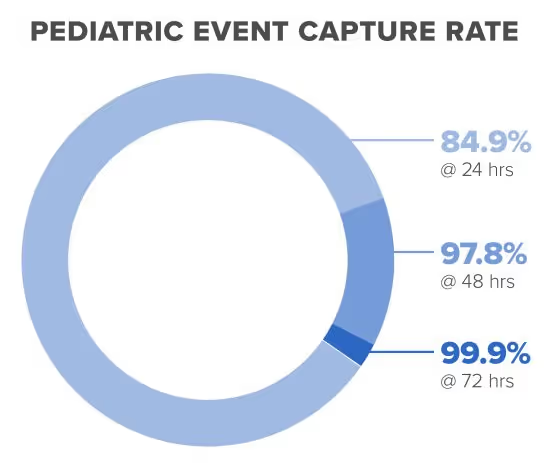
For pediatric patients, a wide majority of events were captured within the first day, but a substantial proportion of patients (12.9%) had events occur between 1 to 2 days.
Conclusion
The results of an analysis of more than 3,600 patient recordings indicate that a wide majority of events are captured by the end of the 3rd day of recording for all cohorts. Read more here https://onlinelibrary.wiley.com/doi/10.1002/epi4.12517.
About the Author
About the Presenter

Hans Klein, Ph.D.
Hans Klein, Ph.D., is the Manager of Scientific Publications for Stratus. Dr. Klein is a social neuroscientist by training and received his doctorate at the University of Texas at Dallas, where his research focused on the neural underpinnings of social cognitive deficits within schizophrenia spectrum disorders, as well as methods for improving measurement and research design.



.svg)
%201.svg)